
The Short Answer: It's Probably Ice, Not a Breakdown
If your garage door feels stuck or sluggish on a cold morning, the most likely culprit is a thin layer of ice gluing the rubber seal to the concrete floor overnight. That's the rule of thumb. But it's not always that simple. Sometimes the real issue is a spring that's lost tension in the cold, opener grease that's thickened up, or sensors fogged with frost. The trick is knowing which symptom points to which cause, so you're not forcing a door that actually needs a part replaced.
Symptoms to Watch For
- Door won't lift at all, even though the opener motor is clearly running and straining.
- A loud pop or crack right as the door finally breaks free — that's the ice seal snapping, not something structural failing.
- Door moves a few inches, then stalls or reverses partway up.
- Manual lifting feels unusually heavy, more than you'd expect even for a cold morning.
- Remote or wall switch works, but the opener's light blinks an error code instead of running the motor.
- Door won't close, or reverses right at the floor every time.
What a Technician Checks, in Order
1. Ice Bonding the Bottom Seal to the Floor
This is checked first because it's the most common cause and the easiest to misdiagnose as something worse. Overnight condensation or melted snow can freeze the rubber weatherstripping to the garage floor, and when the opener tries to lift, it's fighting that bond instead of just the door's weight. Never force it with the opener repeatedly — that strains the motor and gears for nothing. Instead, break the seal manually with a hair dryer, heat gun, or warm water along the seam, then dry the area. If the bottom seal is cracked, torn, or stiff, it's trapping more moisture than it should and is worth replacing before the next cold snap.
2. Thickened Lubricant and Grime in the Tracks
Old grease and accumulated dirt thicken up in cold temperatures, which makes rollers drag instead of roll smoothly. This is especially common in Johnson County winters where road salt and ice-melt residue get tracked in on tires and boots, then settle into the tracks. A technician will clean the tracks with a mild cleaner and reapply a lithium or silicone-based lubricant made for garage doors — not WD-40, which is a degreaser and actually makes things worse over time.
3. Springs Losing Tension in Extreme Cold
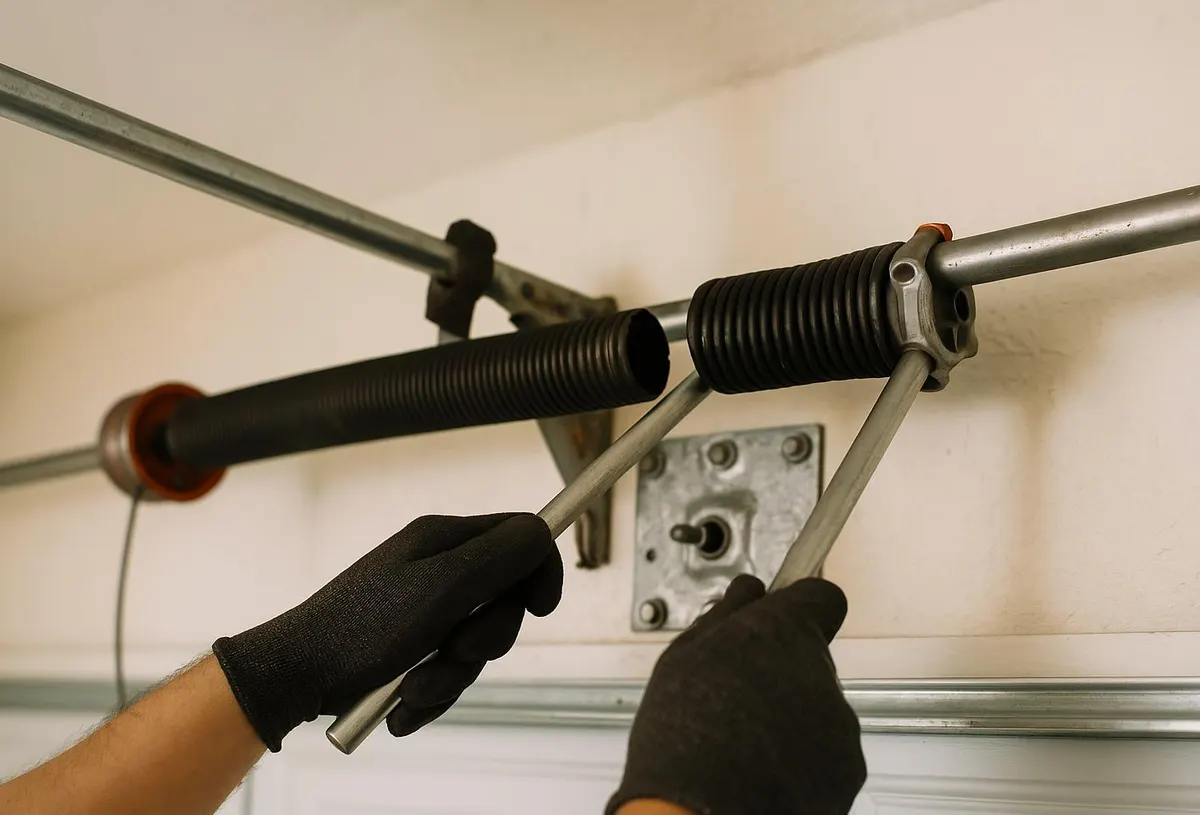
Torsion springs contract slightly when temperatures drop, and a spring that was already a little worn can suddenly feel noticeably weaker during a hard freeze. This often shows up as a door that feels much heavier to lift by hand, or an opener that strains and groans more than usual. The technician checks for visible gaps between coils, rust, or uneven tension side to side. If the spring is worn, it needs spring replacement — this is never a DIY fix, since torsion springs are under enough tension to cause serious injury if handled without the right tools.
4. Opener Motor and Gear Strain
Inside the opener unit, gear grease thickens in cold weather the same way track lubricant does, which can cause the chain or belt drive to bind or the motor to trip its overload protection. A technician listens for grinding or clicking and checks whether the opener is working harder than it should to move the door. Depending on wear, this might mean a gear kit or, if the opener is older, a full opener repair or replacement.
5. Frosted or Misaligned Safety Sensors
The photo-eye sensors near the base of the track can fog up or collect frost on humid winter mornings, which triggers the door to reverse or refuse to close. This is a quick check and usually a quick fix — wiping the lenses and confirming alignment.
6. Cables, Rollers, and Track Alignment
Big seasonal temperature swings can cause a concrete slab to shift slightly, which over time nudges track alignment out of true. Combined with already-worn cables or rollers, this is often what turns a minor cold-weather stiffness into a door that binds every single morning. This gets checked last because it requires a closer inspection, but it's a common finding in older installations.
When to Call Nineveh Garage Door
If breaking the ice seal doesn't solve it, or the door still feels heavy and strained once it's free, it's time to call. We'll start with garage door maintenance — lubrication, track cleaning, and a tension check — and if we find worn cables, bent track, or a spring that's past its prime, we'll walk you through cable & track repair or spring replacement before it leaves you stuck on a sub-zero morning.
If your garage door is fighting you every cold morning, give Nineveh Garage Door a call. We serve Nineveh, Edinburgh, Trafalgar, Franklin, Columbus, Taylorsville, Whiteland, and Greenwood, and we'll get your door moving the way it should before winter really sets in.